Why Drone-Based Seeding Is Changing How UK Farmers Plant
I remember the first time I watched a drone sow a field. It wasn't a demo or a flashy trade show. It was a damp April morning in the Cotswolds, and a farmer I know had hired a contractor to reseed a steep, awkward paddock that his tractor could barely reach. The drone hummed along a planned line, dropped its load, turned, and came back. Forty minutes later, the job was done. No rutted soil, no compacted headlands, no lost day. That moment stuck with me, because it wasn't just a neat trick. It was the start of something bigger.
Drone-based seeding has moved out of the novelty phase. Across the UK, growers and land managers are using it for things that once felt impossible or simply not worth the effort. It is not a replacement for the drill on every acre. But for the right jobs, it is faster, safer, and often more precise than anything we have used before.
What Drone-Based Seeding Actually Does
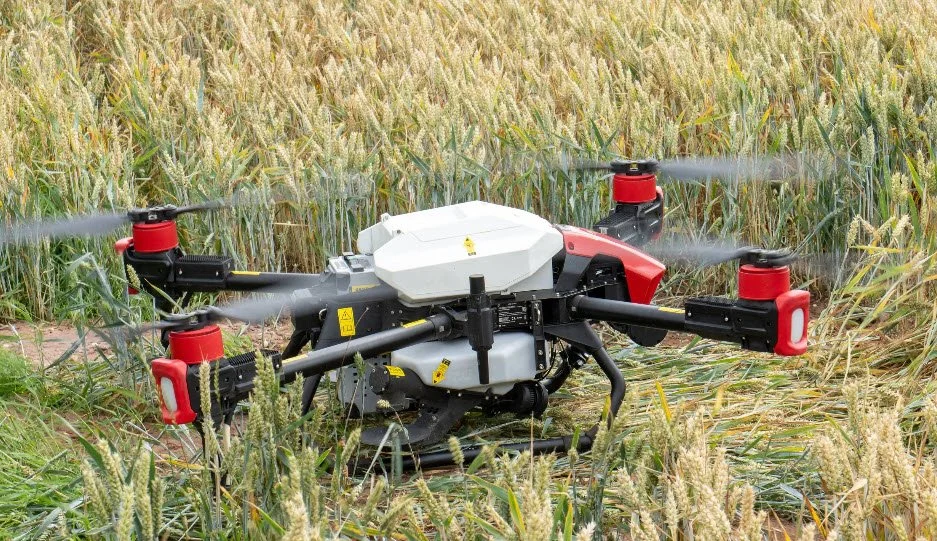
At its core, drone-based seeding uses a multirotor aircraft fitted with a spreader mechanism to distribute seed across a defined area. The operator plans the flight path, sets the rate, and the drone does the rest. Most modern agriculture drone services use GPS and sometimes geotagging to make sure every seed lands where it should. The DJI Agras T30, for example, can carry a substantial hopper and spread seed across a wide swath in a single pass. XAG builds similar machines with a focus on autonomy and data. Even smaller platforms like the SenseFly eBee, which is more of a fixed-wing mapping drone, feed into the same workflow by creating the high-resolution maps that guide the seeder.
The appeal is not just convenience. It is access. Slopes that are too steep for a tractor, wet ground that would bog down a drill, and small awkward corners that get skipped during normal planting are all fair game. A drone does not care about the terrain in the same way a wheeled machine does. It flies over it.
Where It Makes Sense on a UK Farm
One of the clearest wins is cover cropping. After harvest, the window for getting a cover crop in is short. The ground is often compacted, stubbly, and still wet in places. Dragging heavy machinery across it again only makes the compaction worse. A drone can fly in with a mix of seed, sometimes pelleted, and spread it evenly without ever touching the soil. That protects soil health and helps with regenerative agriculture goals, because the soil structure stays intact while the roots get to work.
Another strong fit is overseeding. This is where drone-based seeding really shines. You have an established pasture or a sward that is thinning out. You want to introduce new grasses or clovers without tearing up what is already there. Broadcasting seed by hand is uneven and slow. A drone can do it in a fraction of the time, and with variable rate application, you can increase the rate on the worn patches and ease off on the good parts. It is precision agriculture in the truest sense.
Then there is the rescue job. I have seen drones reseed a field that was washed out by flooding in one corner, or a strip that was damaged by a contractor's turning circle. Instead of waiting for conditions to dry enough to get a tractor in, the farmer calls in a drone service and the seed goes on the next calm day. That speed matters. A few weeks of growth can be the difference between a patch that recovers and a patch that turns to weeds.
Not a Silver Bullet, But Close
For all its strengths, drone-based seeding is not the answer to every sowing job. If you are planting a main crop like winter wheat or oilseed rape on a well-prepared seedbed, a conventional drill is still the tool. It places the seed at the right depth, in contact with moisture, and that is hard to beat. Broadcasting from a drone leaves seed on the surface, which works fine for some species but not all. Seed pellets can help with weight and moisture retention, but they add cost.
What the drone does is expand the toolbox. It lets you do the jobs that were previously impossible or impractical, and it does them with a level of accuracy that is hard to match by hand. It also removes the human risk from steep or awkward ground. Walking a slope with a hand spreader is not just slow, it is dangerous. The drone keeps the operator on firm ground, looking at a screen, while the machine does the risky bit.
The Tech Behind the Hype
The platforms themselves are getting more capable every year. The DJI Agras T30 and its newer siblings are the ones you see most often on UK farms. They carry enough seed for a decent session, and the spreader mechanism is genuinely precise. XAG's kit is also making inroads, with a focus on autonomy that means less hands-on flying and more oversight. Aeroagri is a UK name that has been pushing the adoption of agriculture drone services, and they have done a lot to train pilots and get the technology in front of farmers.
But the hardware is only half the story. The real gains come from the data. Before the drone flies, you map the field. That map tells you where the soil is thin, where the drainage is poor, and where the weeds are worst. You then build a seeding plan that matches the seed rate to the conditions on the ground. That is variable rate application in action. Some systems can even use RFID tags on seed boxes or pallets to keep track of what is being spread and where, which cuts down on errors and gives you a clear record for your agronomist.
Geotagging also means every load of seed is assigned to a specific part of the field. If you need to go back and check germination, you know exactly where to look. That kind of traceability is becoming more important, not just for good practice but for the growing number of carbon and soil health schemes.
Regulations and Realities
Flying a drone over your own land is not a free-for-all. In the UK, the Civil Aviation Authority sets the rules, and they are strict. You need the right permissions and, depending on the operation, a pilot with the correct qualification. This is where services like Aeroagri and other agriculture drone services come in. They have done the paperwork, they have the insurance, and they know the rules around flying near people, livestock, and buildings. For most farmers, hiring a contractor is simpler and safer than trying to become a commercial drone operator yourself.
The rules are there for a reason. A drone that fails mid-flight over a busy road or a neighbour's garden is a serious problem. The good news is that modern drones are reliable, and the operators who do this day in and day out know how to plan for the unexpected. They check the weather, they check the site, and they have contingency plans.
Looking Ahead
I think we are only scratching the surface of what drone-based seeding can do. Companies like DroneSeed, which started in the US with a focus on reforestation, have shown how drones can plant trees in areas that are inaccessible or dangerous. That same thinking is trickling into agriculture. Kespry and SenseFly are building mapping tools that make the whole process more seamless, from survey to seeding to monitoring. Grassroots Carbon is part of a broader movement that values healthy soil and sees aerial seeding as a way to restore degraded land quickly.
For the UK farmer, the practical takeaway is this: if you have a field that is too wet, too steep, or too awkward to seed with a drill, drone-based seeding is worth a look. It is not a magic wand, but it is a genuinely useful tool. It saves time, it protects the soil, and it gets the seed in the ground when the window is tight. And in farming, that window is everything.
The technology will only get better. Batteries will last longer, hoppers will get bigger, and the software will get smarter. But the principle will stay the same: get the right seed, in the right place, at the right time. If a drone can do that where a tractor cannot, then it earns its place in the shed.